
As with OpenAI, Anthropic has an innovative, bespoke corporate structure. Trustees oversee a public benefit corporation—though the structure is experimental and shareholders can be reversed.
1. Public Benefit Corporation
Anthropic markets its chatbot Claude to the public and to businesses. Just as OpenAI was founded in reaction to Google, Anthropic was founded in reaction to OpenAI. Former employees, including the former VP of research at OpenAI, Dario Amodei, quit over safety and commercialization concerns and set out to create their own company.105Olson, (<)em(>)supra(<)/em(>) note 13, at 178–82 (detailing the origin story of Anthropic and noting business opportunities as an additional motivating factor). Founded in 2021, Anthropic presents itself as a safety-oriented company that strives to build “reliable, interpretable, and steerable AI systems.”106(<)em(>)Company \ Anthropic(<)/em(>), (<)a href='https://www.anthropic.com/company'(>)https://www.anthropic.com/company(<)/a(>) (last visited July 3, 2025). Incorporated as a Delaware public benefit corporation (the same legal vehicle OpenAI recently adopted), its board must balance the same three factors in overseeing the company: the pecuniary interests of stockholders, the best interests of those materially affected by the company’s conduct, and the company’s mission to “responsibly develop and maintain advanced AI for the long-term benefit of humanity.”107Anthropic Certificates of Incorporation, (<)em(>)supra(<)/em(>) note 3, at III. The company has tweaked its Certificate of Incorporation twice a year since its incorporation in Jan. 26, 2021, but has consistently maintained this mission since the second iteration of its Certificate of Incorporation in May 24, 2021. Unless otherwise noted, the analysis is based on the latest version available at the time of writing, dated Jan. 27, 2025.
2. Long-Term Benefit Trust
Like OpenAI, Anthropic has been experimenting with its corporate structure. In 2023, it added a long-term benefit trust to oversee its activities.108(<)em(>)Anthropic Certificate of Incorporation(<)/em(>), Google Docs IV(D) (May 20, 2024), (<)a href='https://drive.google.com/file/d/17szwAHptolxaQcmrSZL_uuYn5p-N6pex/edit'(>)https://drive.google.com/file/d/17szwAHptolxaQcmrSZL_uuYn5p-N6pex/edit(<)/a(>) (creating Class T stocks attributed to the trust); (<)em(>)The Long-Term Benefit Trust(<)/em(>), Anthropic, (<)a href='https://www.anthropic.com/index/the-long-term-benefit-trust'(>)https://www.anthropic.com/index/the-long-term-benefit-trust(<)/a(>) (last visited Nov. 23, 2023); Amy Simmerman, David Berger & John Morley, (<)em(>)Anthropic Long-Term Benefit Trust(<)/em(>), Harv. L. Sch. F. on Corp. Governance (Oct. 28, 2023), (<)a href='https://corpgov.law.harvard.edu/2023/10/28/anthropic-long-term-benefit-trust/'(>)https://corpgov.law.harvard.edu/2023/10/28/anthropic-long-term-benefit-trust/(<)/a(>); assisted by the same experts who advised Meta on the Oversight Board, (<)em(>)see(<)/em(>) (<)em(>)Ethical Compass Advisors(<)/em(>), (<)a href='https://www.ethical-compass-advisors.com/'(>)https://www.ethical-compass-advisors.com/(<)/a(>) (last visited July 8, 2025). Disinterested trustees incentivize the company to take the long view on safety over rapid commercialization.109(<)em(>)The Long-Term Benefit Trust(<)/em(>), Anthropic, (<)em(>)supra(<)/em(>) note 108 (“[T]he LTBT can ensure that the organizational leadership is incentivized to carefully evaluate future models for catastrophic risks or ensure they have nation-state level security, rather than prioritizing being the first to market above all other objectives.”). The trustees control a class of no-value shares slated to elect a majority of the PBC’s board of directors over time, with the ability to remove those directors without cause—see Figure 8.110Anthropic Certificate of Incorporation, (<)em(>)supra(<)/em(>) note 3, §§ IV (D) (1), VIII (B). As of November 2026, one of the five seats are vacant, with no announced successors. One trustee left to become Chief Global Affairs Officer, thus moving from disinterested oversight to an operational role.
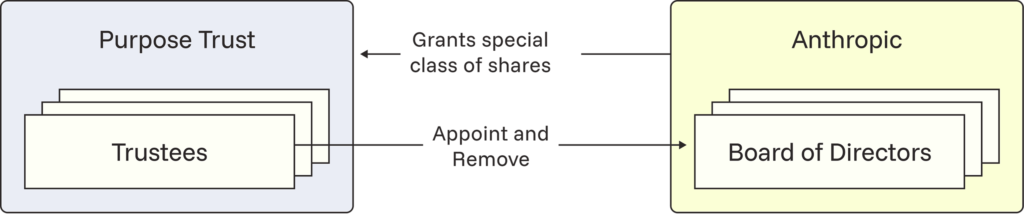
Figure 8: Source: Schuett et al.111Jonas Schuett, Ann-Katrin Reuel & Alexis Carlier, (<)em(>)How to Design an AI Ethics Board(<)/em(>), 5 AI & Ethics 863, 869 (2024).
The long-term benefit trust is set to play a prominent oversight role via its control of the PBC’s board, but several escape hatches constrain it. For example, a supermajority of shareholders can rewrite the rules applicable to the trust’s powers—see Figure 9.112Anthropic Certificate of Incorporation, (<)em(>)supra(<)/em(>) note 3. at XI (requiring a supermajority to amend the provisions pertaining to the stocks of the trust). (<)em(>)See also(<)/em(>) art. IV (D)(4)(iv) (setting a gradually higher threshold for the stockholder supermajority and noting that “the final phase will require 75% of common stock, 50% of Series A Preferred stock as well as 75% of preferred stock, or 85% of the total voting stock.”); (<)em(>)see also(<)/em(>) Simmerman, Berger, & Morley, (<)em(>)supra(<)/em(>) note 108 (outlining three avenues to alter the trust: “by consent of the Voting Trustees and the company’s stockholders; by consent of the Voting Trustees and the company’s directors prior to the time the Voting Trustees gain the power to elect a majority of the directors; or by a supermajority of stockholders”). The architects of Anthropic’s structure contend that this flexibility is necessary to ensure its durability.113Simmerman, Berger, & Morley, (<)em(>)supra(<)/em(>) note 108.
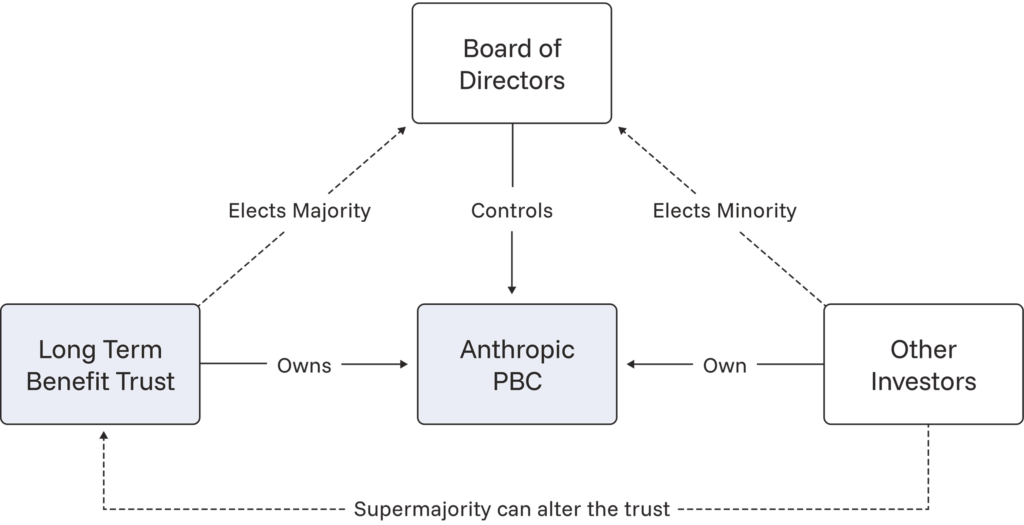
Figure 9: Anthropic’s organizational chart.
The trust agreement remains confidential such that its precise mechanics cannot be ascertained. However, a public summary outlines its obligations to ensure that “the company combines its pursuit of profit with the achievement of the company’s mission to develop and maintain advanced AI for the long-term benefit of humanity as well as a commitment to the interests of those materially affected by the company’s conduct,” essentially mirroring the default obligations of a public benefit corporation under Delaware law.114(<)em(>)Id.;(<)/em(>) The Long-Term Benefit Trust, (<)em(>)supra(<)/em(>) note 108 (explaining that the trust has the same purposes as Anthropic: “responsibly balances the financial interests of stockholders with the interests of those affected by Anthropic’s conduct and our public benefit purpose”).
The summary also mentions that the trust is a ‘purpose trust’ lacking beneficiaries.115Simmerman, Berger, & Morley, (<)em(>)supra(<)/em(>) note 108 see also Del. Code Ann. tit. 12, § 3556 describing purpose trusts. This is unusual because trusts are typically tripartite arrangements comprising (1) a settlor dedicating assets to the trust; (2) trustees; and (3) beneficiaries.116For a full list of a trustee’s fiduciary duties, (<)em(>)see(<)/em(>) Mark L. Ascher, Austin W. Scott, & William F. Fratcher, Scott and Ascher on Trusts 17 (6th ed. 2023). Beneficiaries typically ensure trustees act in good faith, with care and loyalty to prioritize the needs and interests of the beneficiaries. In the absence of beneficiaries, Delaware law provides two main ways to enforce a purpose trust: either the trust agreement appoints enforcers or courts do so.117Del. Code Ann. tit. 8, § 3556 (c). As an additional layer of protection, somebody with an interest in the trust can ask to court to be appointed; Adam J. Hirsch, (<)em(>)Delaware Unifies the Law of Charitable and Noncharitable Purpose Trusts(<)/em(>), Estate Planning, 5 (2009), (<)a href='https://papers.ssrn.com/abstract=1481977'(>)https://papers.ssrn.com/abstract=1481977(<)/a(>). Anthropic went for the first option, appointing the company and shareholders with sufficient equity and tenure to enforce the trust.118Simmerman, Berger, & Morley, (<)em(>)supra(<)/em(>) note 108. Here, “the company” presumably means its Board of Directors, but since the trust agreement is private details cannot be confirmed. This is a crucial weakness because a company and its shareholders typically care more about short-term profitability than the longer timeline. Had Anthropic appointed disinterested civil society third parties to enforce the trust, oversight would have been much more robust. As it stands, the trust enforcement structure actually reinforces the very profit-centered pressure trustees are supposed to offset. It deters trustees from ignoring shareholders’ interests, but does little to incentivize them to thoroughly monitor the board’s duty to consider the mission and the interests of those materially affected by Anthropic’s activities.
3. Control and Governance Post-IPO
As this report goes to press, Anthropic has released further information about its structure. In preparation for its initial public through which the company will begin trading shares on the public market, it filed an amended registration statement with the Securities and Exchange Commission on November 2, 2026. The filing indicates that public investors will have limited influence over who sits on the board, but some say over changes to the Trust. The board is structured as follows:
- 3 directors elected by investors and founders, with the founders holding a majority of the vote
- 3 directors elected by the Trust
- 1 director elected by the Trust, subject to approval by a board committee on which directors elected by investors and founders hold two of three seats. If the committee does not approve, employees vote on the Trust’s choice.
The founders hold their majority vote through a single special share, held by a limited liability company (LLC) whose members are Anthropic’s seven co-founders. That share lapses once fewer than three founders (or their successors) remain members of that company, after a transition period. Because the founders control who fills the seats elected by investors and founders, they have indirect influence over the Trust’s fourth seat, the one that gives the Trust its board majority. If the committee and the Trust disagree, employees settle the matter through a special class of voting shares. Employees receive these shares based on their length of service, and receive more for pledging some of their equity to charity, giving up financial value in exchange for a greater say.
The filing also sets out how the Trust can be changed. With the support of 80% of trustees and 80% of the board, its terms can be amended, or its power to elect directors removed altogether. Shareholders can also change the Trust over the trustees’ objections. As long as the founders’ share exists, this requires the agreement of founders, employees and investors. Once the founder’s share lapses, investors alone can do so, with 85% of investor shares.
The diverse corporate models of the three leading research labs each attempt to weave public interest missions into their activities. Whether it is DeepMind’s ill-fated Global Interest Company plan, OpenAI’s “capped profit” joint venture or Anthropic’s long-term benefit trust overseeing a public benefit corporation, all have at some point tried to build corporate structures better aligned with public interest. The following case studies evaluate how commitments to place the mission above profits play out in practice.