
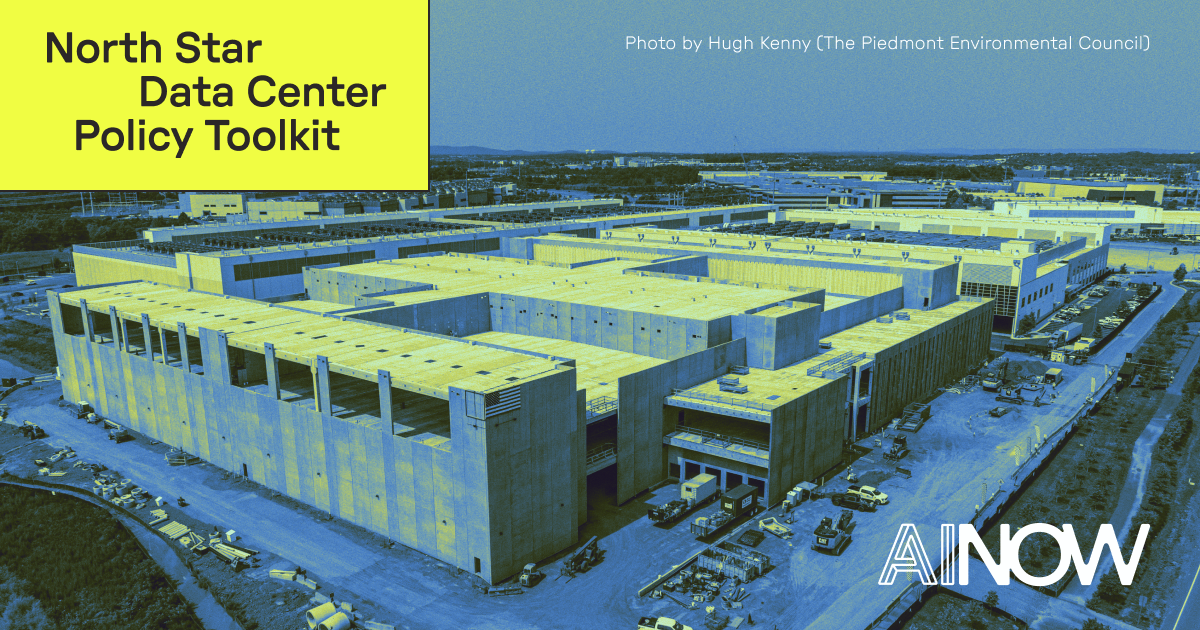
This policy toolkit is primarily geared toward stopping, slowing, and restricting rampant data center development in the US at the local and state level. Our approach recognizes the extractive relationship between data centers and local communities: Hyperscale data centers deplete scarce natural resources, pollute local communities and increase the use of fossil fuels, raise energy costs for everyday ratepayers, pull tax dollars away from community needs, and fail to deliver on overpromised economic developments.
This toolkit is intended to help organizers and policymakers identify the strongest possible actions. Recognizing that the North Star policy may not always be feasible, we also offer scaffolded protections that put people above corporate profits.
The toolkit provides concrete policy recommendations, primarily targeted toward jurisdictions in the US that do not yet have a data center in their community, or that are working to strengthen existing legislation or regulation to account for new hyperscaler proposals. The resource is organized into local and state policy recommendations to stop and restrict data center development.
How to use the toolkit:
- The toolkit is intended as a menu of options to be analyzed in relation to local and state conditions.
- Not every intervention will be feasible in every locality, state, or region due to differences in local and state laws, existing regulation, and political conditions.
- The issue-specific recommendations (water, energy, air quality, and so on) can be used both to limit the impacts of data centers and to act as mechanisms to restrict data center development when they do not work in the community’s best interest.
- We provide examples of existing or proposed policies, with notes indicating that they are very strong, strong, or weak. Please note that inclusion in this toolkit does not mean we endorse the example or specific language used. In cases where there is no strong example, we have consulted experts and community advocates to identify the North Star policy action, threshold, or quantitative targets.
Please reach out to the AI Now Institute at datacenters@ainowinstitute.org with questions.
Research Areas